Coastal Norway Under the Oval
Northern Norway puts you directly beneath the auroral oval, with fjords, peaks and beaches as your foreground. The trade-off is weather. The Atlantic keeps the coast mild, but it also brings cloud. Choose a base that lets you drive away from it.
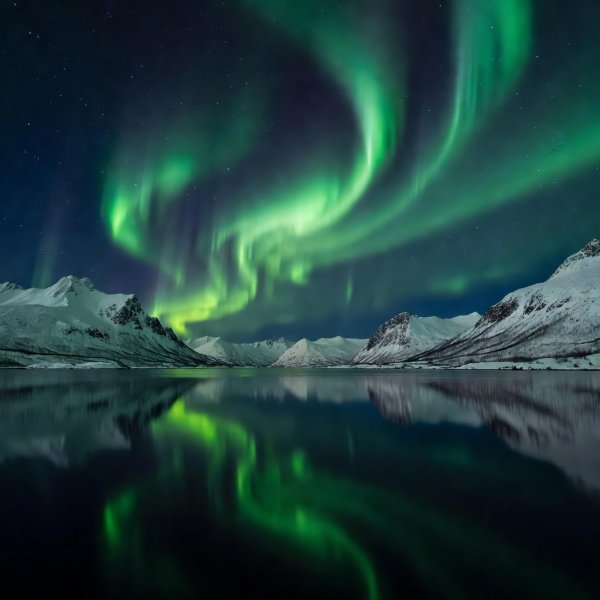
Why the Coast Is Both a Gift and a Gamble
The Gulf Stream keeps coastal northern Norway far warmer than its latitude suggests. Tromsø often sits only a few degrees below freezing in midwinter, while towns across the border in Finland may be twenty degrees colder. For a first-time visitor that is comfortable. Roads stay open more often, harbours stay ice-free, and standing outside for two hours is easier.
The same mild sea air carries moisture, and that moisture turns into cloud and snow showers that can sit on the coast for days. A calm, patient approach works best here: do not lock yourself into one viewpoint. The great advantage of Norway is that the land rises quickly inland, and valleys such as Skibotn often lie in a rain shadow. Many guides from Tromsø drive east toward the Finnish border on cloudy nights for exactly this reason.
Places to Base Yourself in Northern Norway
Tromsø
The most popular aurora city in Europe, with direct flights, a full range of places to stay and dozens of guides. The city is too bright for faint displays, but the Fjellheisen cable car to Storsteinen gives a high view on clear nights, and dark shores begin within half an hour's drive. The Arctic Cathedral across the bridge makes a classic foreground. Polar night runs from late November to mid-January.
Kvaløya, Ersfjordbotn and Sommarøy
West of Tromsø, the island of Kvaløya offers mountain-ringed fjords such as Ersfjordbotn, and the road continues to the small fishing islands of Sommarøy. Expect very dark skies and wide open views north. Expect also the full force of coastal weather.
Lyngen and Skibotn
East of Tromsø, the jagged Lyngen Alps rise straight from Lyngenfjord. Further inland, the Skibotn valley is known for drier, clearer nights than the outer coast and is a common escape route for chasers.
Alta
Alta lies at the head of a long fjord in Finnmark and has a reputation for steadier weather than the outer coast. It is where Kristian Birkeland set up an aurora observatory on Haldde mountain around 1899, and the modern Northern Lights Cathedral nods to that history. The Alta River valley gives quick access to darkness.
Senja
Norway's second-largest island, south-west of Tromsø, with dramatic outer-coast viewpoints such as Tungeneset and Bergsbotn. Quieter than Lofoten, equally exposed to weather.
Lofoten
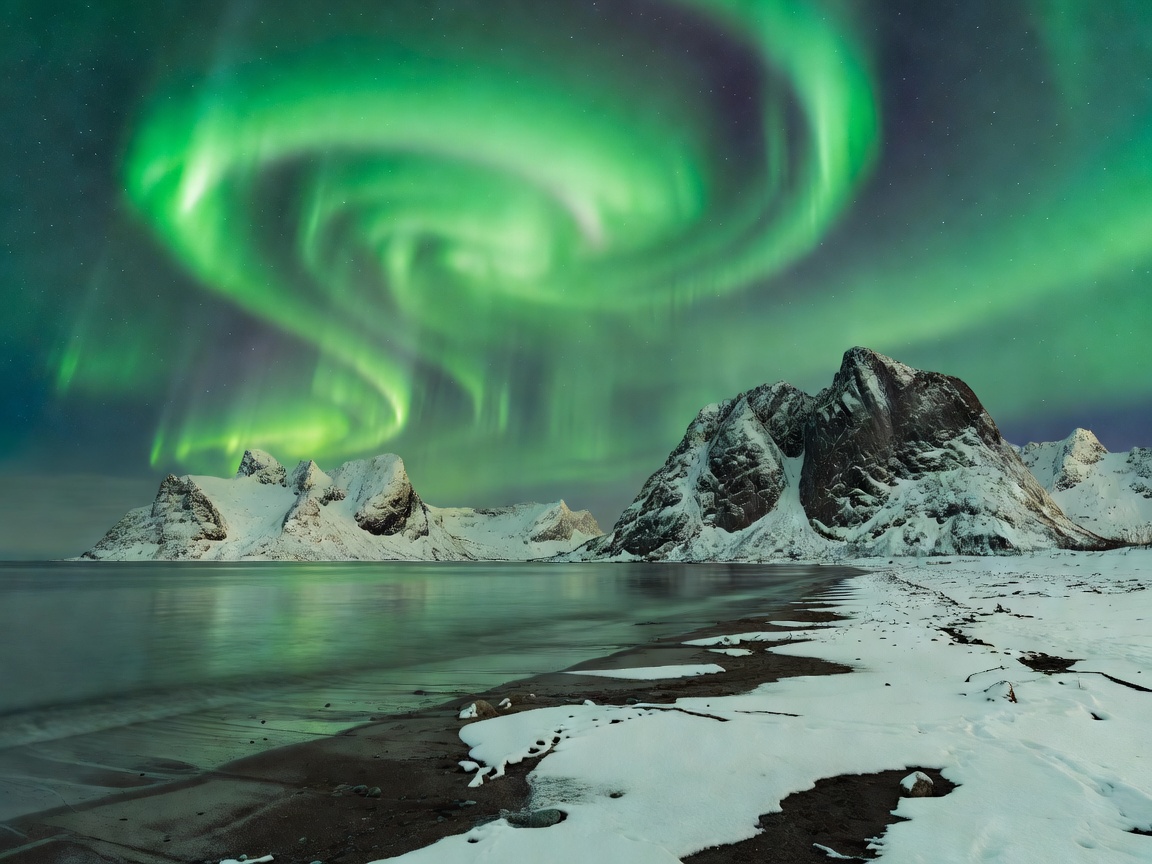
Beaches such as Haukland, Uttakleiv and Skagsanden, and the fishing villages of Reine and Hamnøy, are among the most photographed aurora scenes anywhere. Lofoten sits slightly further south than Tromsø, so it needs a little more activity, and the weather is famously fickle. Go for scenery and stay long enough to wait out the cloud.
Svalbard
Longyearbyen lies so far north that the main oval often sits to the south of it at night. During the long polar night, though, you can see rarer daytime aurora. It is a special trip rather than a first choice.
Getting Around Without a Hire-Car Panic
Winter roads in northern Norway are usually well maintained, but they are icy, dark and narrow. Hire cars come with winter tyres. If you have never driven on packed snow, a guided chase from Tromsø or Alta is the calmer choice, because the guide reads the cloud forecast and does the driving.
The Norwegian Public Roads Administration publishes road and mountain-pass conditions, and some routes close in storms. Always check before a long night drive, carry warm clothing in the car, and never stop on the carriageway to look up. Use proper lay-bys.
The Hurtigruten coastal ships also pass this coast through the winter. A ship moves with the weather rather than away from it, so treat it as a lovely way to travel, not a way to improve your odds.
A Calm Three-Night Plan for Tromsø
On your first afternoon, check the cloud forecast on Yr for Tromsø, Kvaløya and Skibotn. If the coast looks clear, head to a dark shore on Kvaløya after dinner. If it is cloudy everywhere, rest. On the second day, drive a likely route in daylight so you know the lay-bys and the light-free spots. On the third night, if the coast is still grey, consider a guided chase inland.
Spread over several nights, the coast gives you a good chance of at least one clear spell. It still cannot guarantee one. That honesty is worth keeping in mind as you book.
Useful sources: Yr weather forecasts (opens in new tab) · Norwegian Public Roads Administration (opens in new tab) · Visit Norway (opens in new tab)