Swedish Lapland's Clear-Sky Corners
Swedish Lapland lies inland, behind the mountains that run along the Norwegian border. That position gives it colder, drier winters than the coast and some of the steadiest aurora skies in Europe. Here is where to stay and how to make the most of it.
How the Mountains Shape the Sky
Most winter weather arrives from the west, off the Atlantic. As moist air climbs the Scandinavian mountains it drops snow and cloud on the Norwegian side, and it often descends drier on the Swedish side. That is the simple idea behind Abisko's famous blue hole. It is a real and well-documented rain shadow, but it is a tendency, not a promise. Some weeks the cloud pours straight over the mountains.
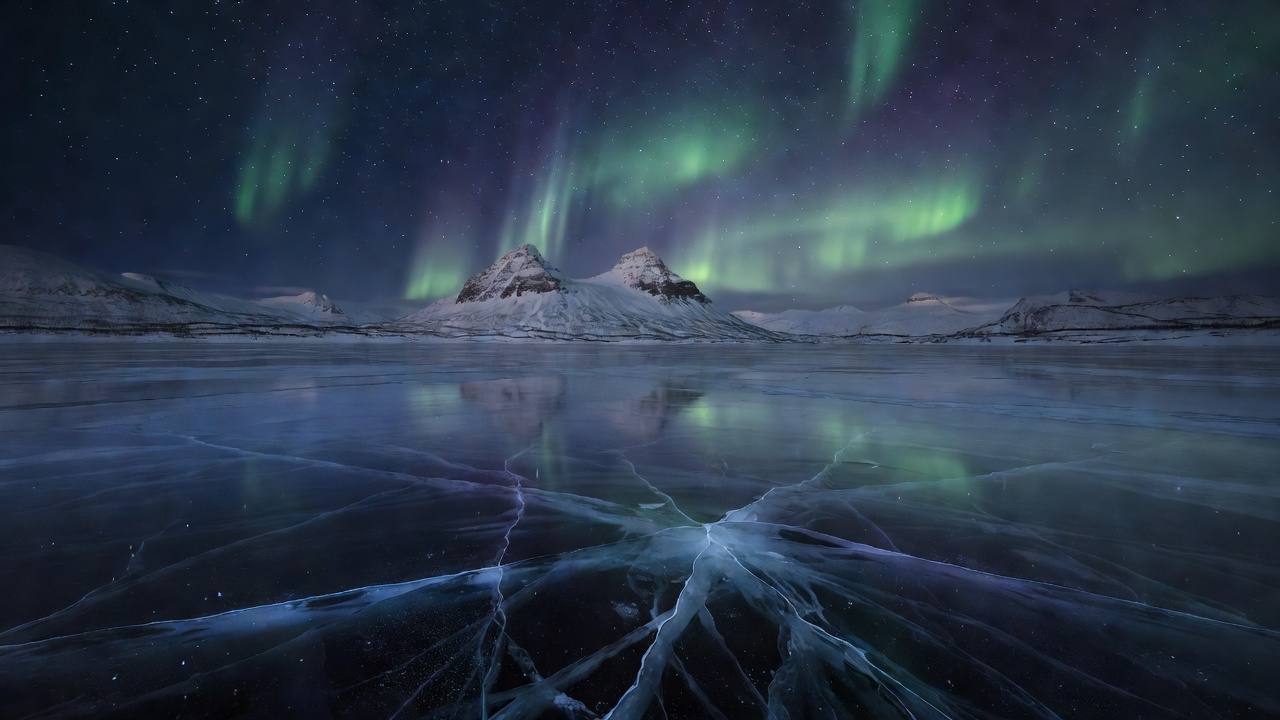
The other gift of inland Sweden is cold, settled high pressure. When a cold spell parks over Lapland, it can bring several still, clear nights in a row. Those are the nights when a quiet lake shore turns into the best seat on earth. They are also nights of −25 °C or colder, so the planning shifts from finding the aurora to staying warm while you wait for it.
Bases in Swedish Lapland
Abisko
A small village and national park on Torneträsk. Abisko National Park was among Sweden's first national parks, established in 1909, and the Kungsleden hiking trail begins here. The Aurora Sky Station sits on Mount Nuolja and is reached by chairlift, lifting you above low mist and village lights. The frozen lake shore is a short walk from most lodgings, and the view toward the U-shaped Lapporten valley makes a striking skyline.
Björkliden and Riksgränsen
Further west along the same railway, these two mountain resorts sit closer to the Norwegian border. They are dark and scenic but slightly more exposed to coastal cloud than Abisko.
Kiruna
Sweden's northernmost town is a mining town in the middle of a long move, as its centre is relocated away from the expanding LKAB iron ore mine. It has an airport and is home to the Swedish Institute of Space Physics and, outside town, the Esrange Space Center. Town lights mean a short drive for real darkness.
Jukkasjärvi
A village on the Torne River east of Kiruna, home to the Icehotel, which has been rebuilt from river ice every winter since the early 1990s. The riverbanks outside the village are a calm, dark place to wait.
Jokkmokk and Porjus
Just north of the Arctic Circle, Jokkmokk is a centre of Sámi culture and hosts a winter market held since 1605, in early February. Porjus, further north, sits beside the Laponia World Heritage area. Both are quieter and slightly further south, so they need a little more geomagnetic activity.
Luleå
A coastal city on the Gulf of Bothnia with a frozen archipelago in winter. It lies south of the Arctic Circle, so displays are less frequent, but strong nights can be lovely over the sea ice.
Arriving by Train
The Ore Line, Malmbanan, runs from Luleå through Kiruna and Abisko to Narvik on the Norwegian coast. A night train from Stockholm continues all the way to Narvik through the winter, making Abisko one of the few true wilderness aurora bases reachable without a car.
- Book your train and lodging together, so a late train does not leave you without a bed.
- Pack a headlamp with a red-light setting for the walk to the lake.
- Check SMHI or Yr for the cloud forecast once you arrive.
Staying Comfortable in Inland Cold
The difference between a miserable night and a magical one is often a pair of boots. Inland Lapland cold is dry, which helps, but standing still on lake ice drains heat quickly. Wear a wool base layer, a fleece or down mid-layer and a windproof shell. Thick mittens beat gloves. Bring a hot drink in a vacuum flask and plan short warm-up breaks indoors.
Respect the land too. Large parts of this region are reindeer herding areas of the Sámi. Stay on roads and marked trails, close gates, and do not drive on lake ice unless locals say a route is open.
Useful sources: SMHI weather service (opens in new tab) · Sweden's National Parks (opens in new tab) · Visit Sweden (opens in new tab)